< Back Case Study | BioTech
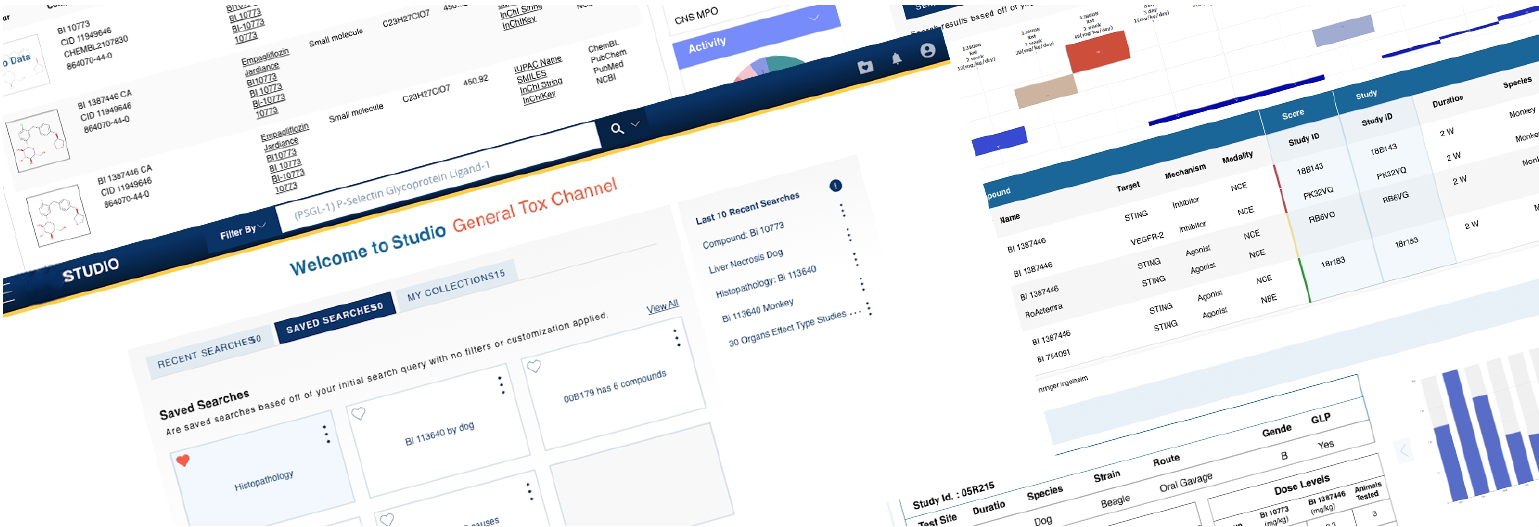
Nonclinical Drug Safety
Project Overview
Client: Boehringer Ingelheim
Industry: BioTech Pharma
Platform: Web, Tablet
Focus: Risk Assessment, Personalization
My Role
UX Strategy & Experience Design
Interaction Design & Rapid Prototyping
Design Systems & UI Components
Cross-functional collaboration (Product + Engineering)
Documentation (flows, specs, scenarios)
Tools & Deliverables:
Figma > Wireframes & Prototypes
Mural & Figjam > Whiteboarding and collaboration
Qualtrics > Quantitative Research > Competitors Site Analytics
·Documentation > Roadmaps > Use Cases > Benchmarking
Lucid > Diagram > Personas
Non-clinical scientists relied on fragmented systems and manual workflows to analyze toxicology data, limiting their ability to detect adverse effects efficiently and scale insights for predictive modeling.
Slower safety assessments
Increased risk of missed adverse signals
Inefficient research workflows.

Discover
Goal: Understand how non-clinical scientists analyze drug safety data
Conducted stakeholder interviews with toxicologists and pharmacologists, mapped current-state workflows, and reviewed key artifacts including study reports, toxicology summaries, and spreadsheets.
Toxicologist
Needs: Rapid adverse effect detection
Pain: Manual cross-study comparison
Goal: Fast risk assessment
Pharmacologist
Needs: Understand compound behavior
Pain: Disconnected pharmacology and tox data
Goal: Correlate mechanism with toxicity
Research Scientist
Needs: Clear interpretation of complex data
Pain: High cognitive load
Goal: Simplified, guided exploration
“Success not just defined in usability, but in how effectively the system structures data for machine learning and improves early risk detection.”
Project Goals
Design a centralized, intelligent platform that:
Enables rapid exploration of toxicology data
Supports read-across analysis
Reduces risk through data-driven insights
Lays the foundation for machine learning prediction models
Defining the Problem
Non-clinical scientists lack a unified, efficient way to compare studies and detect adverse signals across fragmented datasets.
Design Opportunity:
Make comparison the primary interaction model
Reduce cognitive load in multi-variable analysis
Structure data for AI/ML readiness
Solution Summary
Designed a centralized platform enabling:
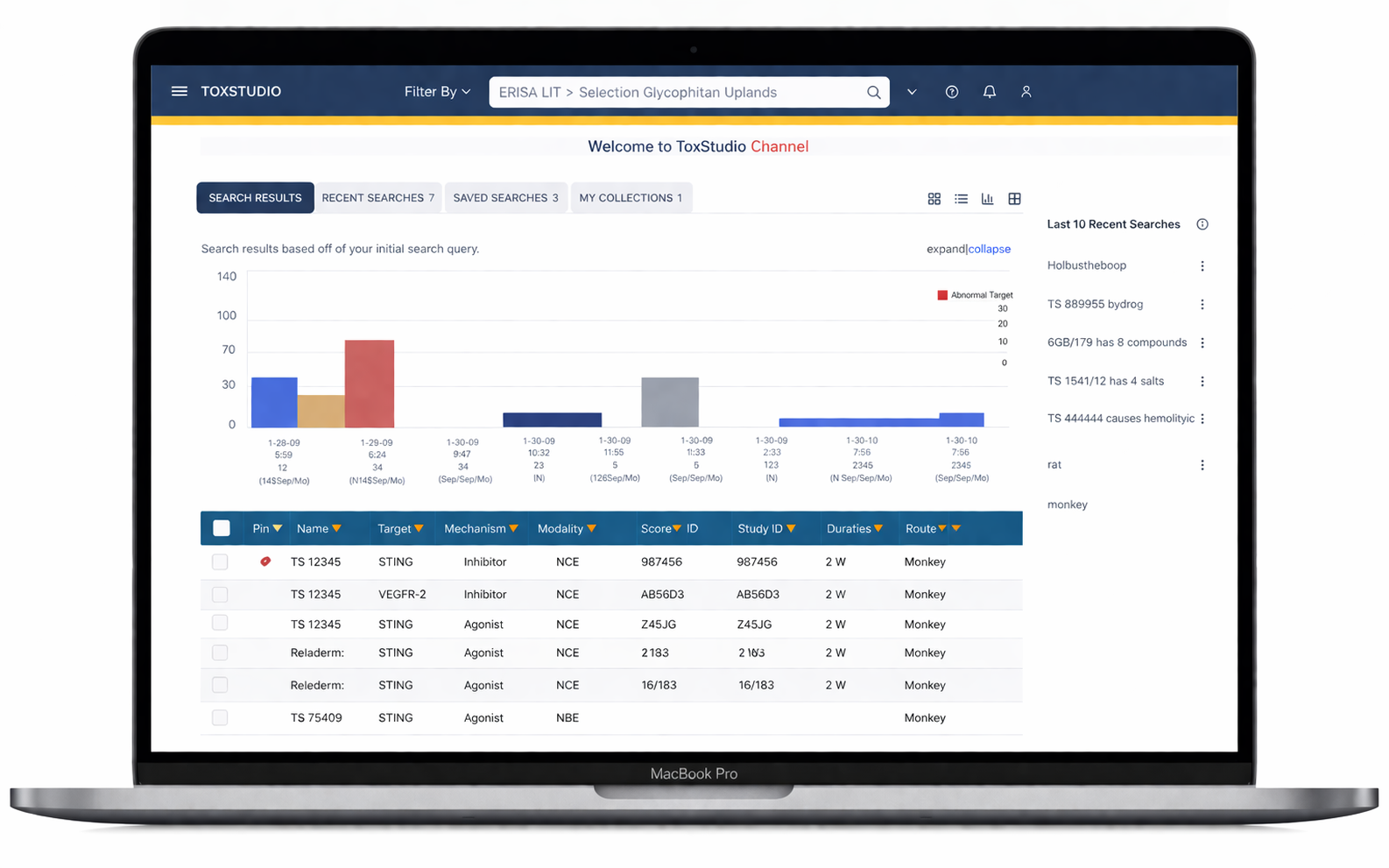
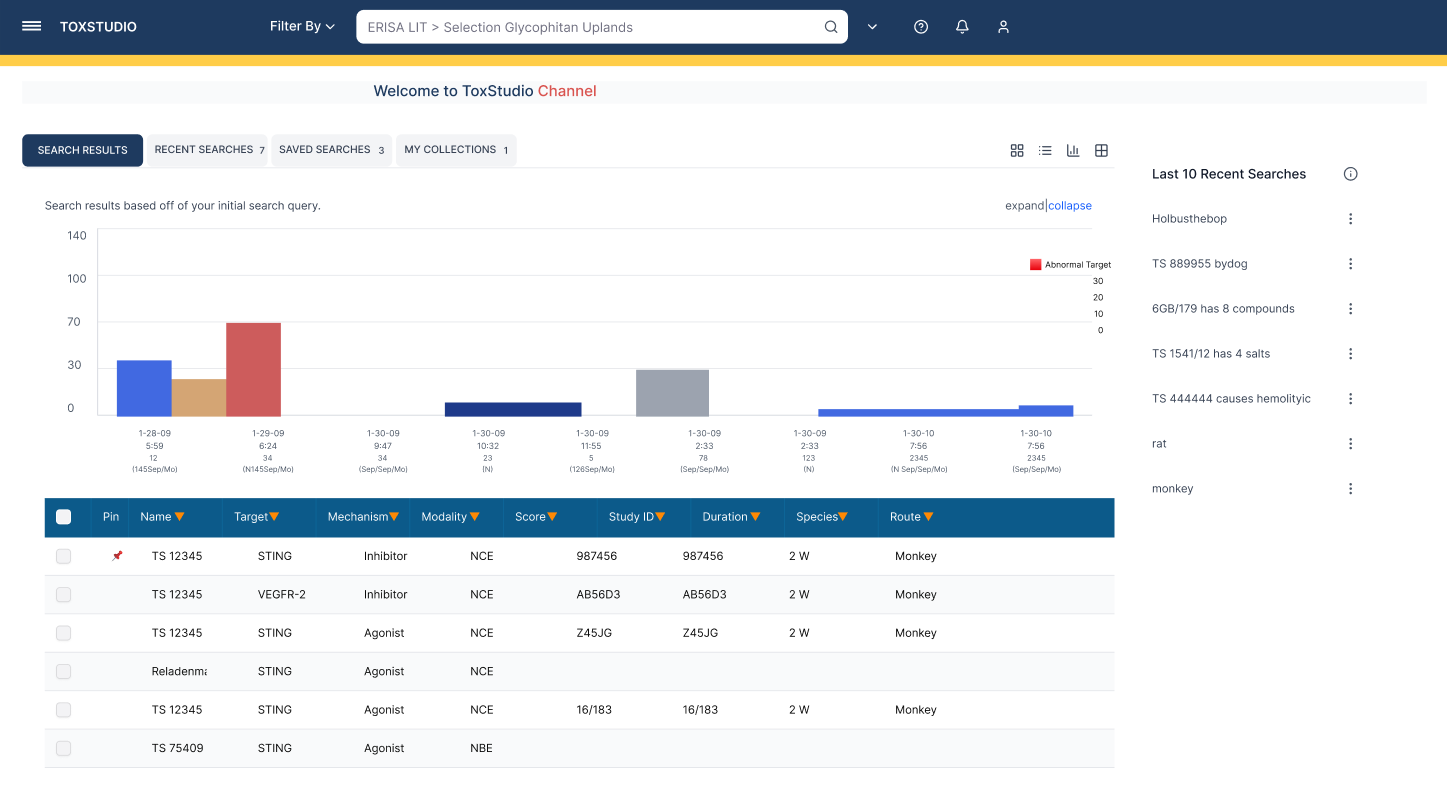
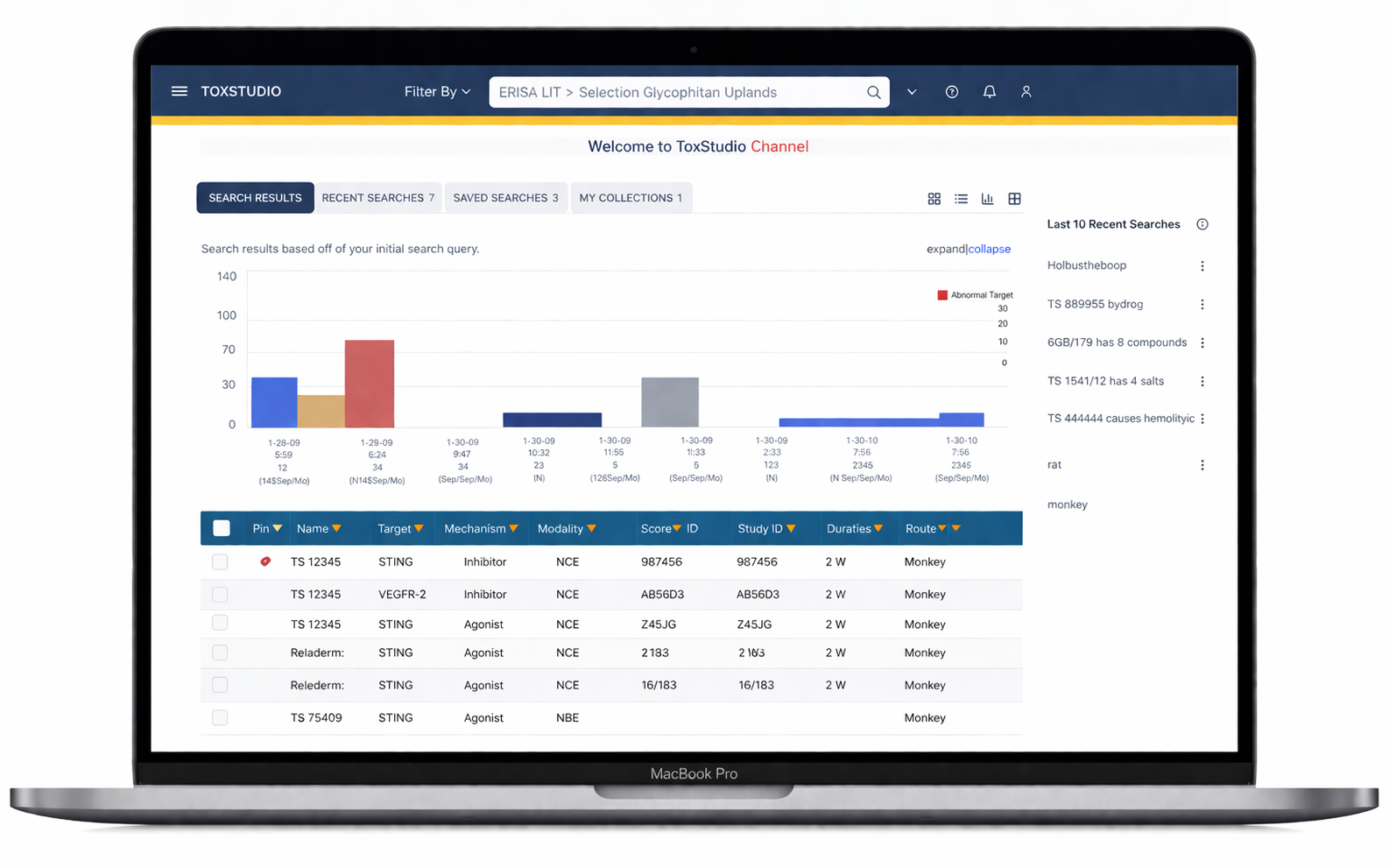
Multi-dimensional search (compound, species, modality)
Side-by-side study comparison (read-across analysis)
Visual risk detection (heatmap alerts)
Deep access to toxicology data (NOAEL, histopathology, PK)
Customizable user-driven views
Built using design thinking and user testing to create comparison-first workflows that improve decision-making and generate machine learning–ready insights.
Process strategy
Approached this as a systems design problem by restructuring the information architecture around how analysts think—region, theme, risk type, and time horizon—then designing a Threat Lens dashboard to surface active and emerging risks, introducing advanced filtering and comparison tools to support analysis workflows, and building personalization features so users could track what mattered most.
Key features
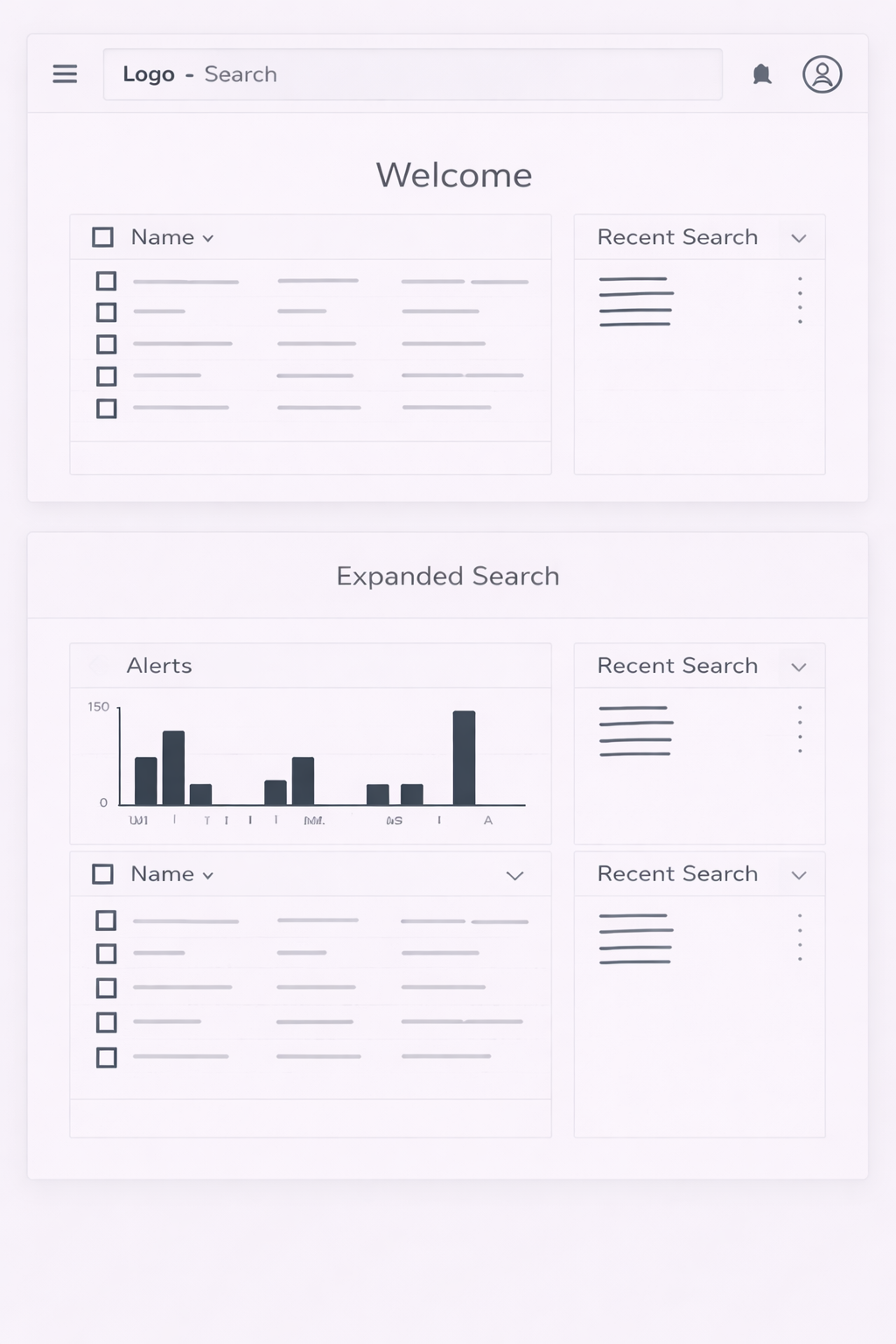
Deliver a centralized Threat Lens dashboard for real-time risk visibility, enable multi-dimensional filtering to reduce search friction, provide side-by-side comparison tools to support decision-making, and establish a personal workspace for saving and tracking intelligence.
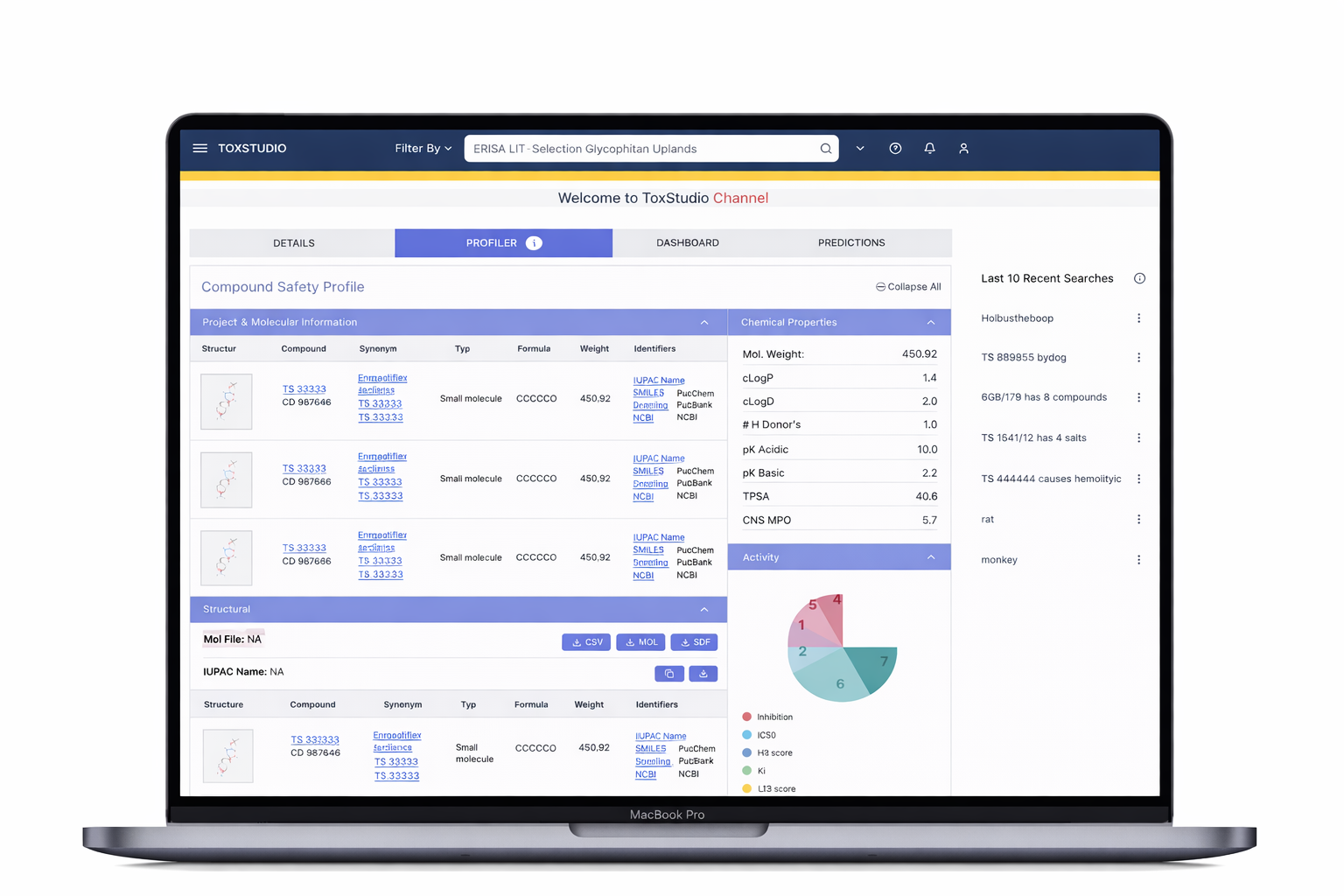
Users immediately engage with relevant studies without confusion
“This reduced time to insight significantly and increased engagement with key workflows like comparison and saved intelligence.
More importantly, it shifted the platform from passive content consumption to active decision support.”
Journey Mapping
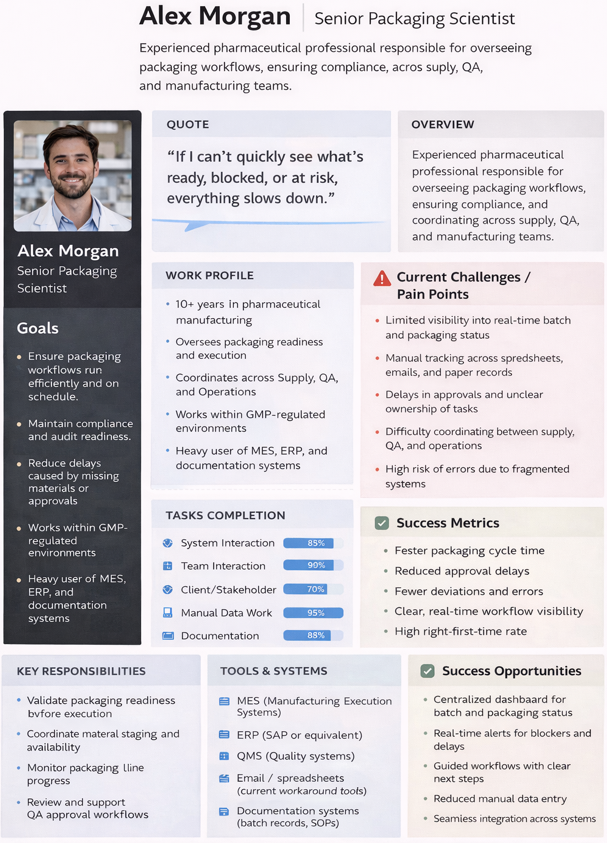
User: Corporate Risk Analyst
Context: Evaluating geopolitical risk using Stratfor Worldview
Product innovation
This work sits at the intersection of UX, data systems, and predictive modeling, focusing on designing for decision-making under uncertainty—a direction increasingly central to AI-driven products.
Evolution
“If I were to evolve this further, I’d integrate AI-driven summarization and predictive risk scoring to move even closer to real-time decision intelligence.”
Comparison
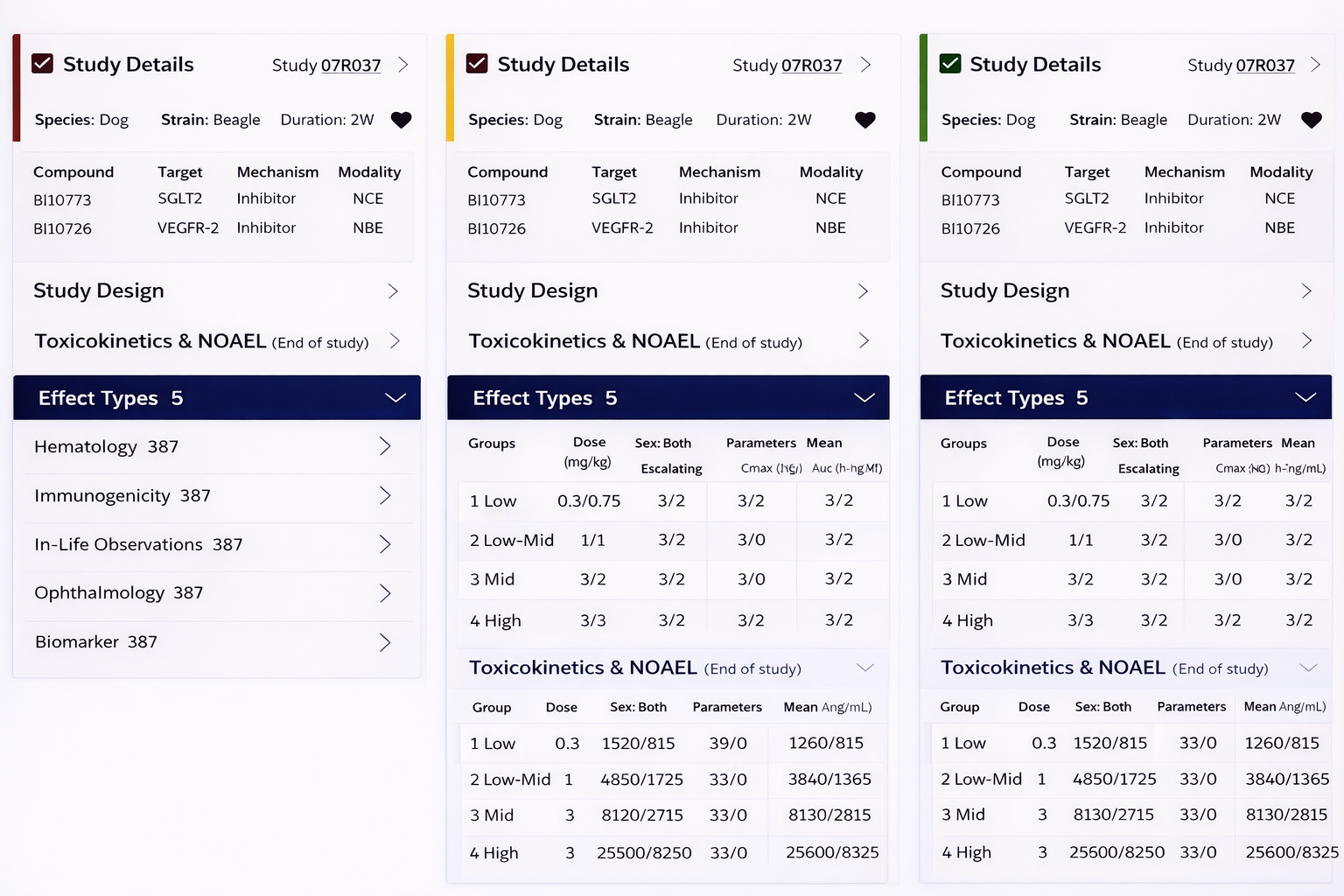
A/B Testing
Tested side-by-side comparison versus tabbed views, and heatmap versus text-based alerts, to identify the fastest path to insight.
Validation
Users completed comparison tasks faster with side-by-side views
Heatmaps significantly improved signal detection speed
Filtering reduced dataset complexity but required guided defaults
Users preferred visual summaries before deep data
Product innovation
This work sits at the intersection of UX, data systems, and predictive modeling, focusing on designing for decision-making under uncertainty—a direction increasingly central to AI-driven products.
Evolution
“If I were to evolve this further, I’d integrate AI-driven summarization and predictive risk scoring to move even closer to real-time decision intelligence.”
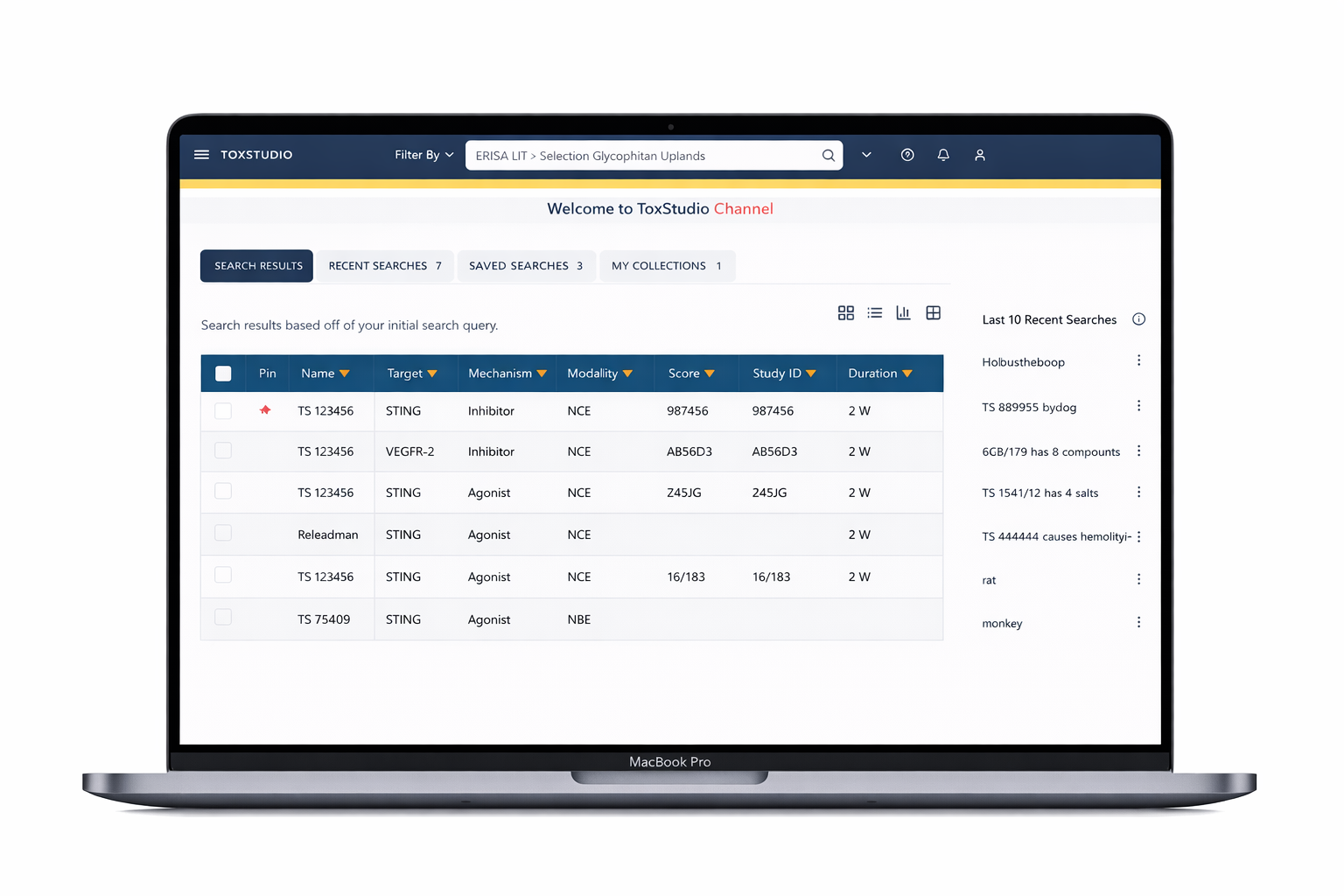
The platform heavily rely on comparison feature as prime factor of the evaluating research findings.
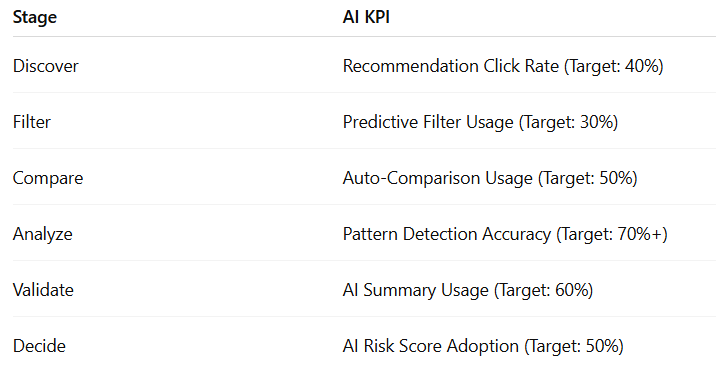
“We aligned KPIs to each stage of the user journey to ensure we weren’t just improving usability, but accelerating decision-making and generating structured data for machine learning.”
Metrics
Meta KPI’s
Time to Insight (TTI): ↓ 50%
End-to-End Task Success Rate: 90%+
User Retention (Weekly Active Users): +35%
ML-Ready Data Growth: 2–3x